NY Travel Ban: What a Storm Driving Ban Means in New York
Short answerYes, when an official orders one. A local leader can ban travel during an emergency under Executive Law § 24, and knowingly breaking that order is a class B misdemeanor. In recent storms the state limited trucks and urged drivers to stay home.
Last verified: October 26, 2026 against Executive Law §§ 24, 28 and 29-a, Penal Law §§ 70.15 and 80.05, and 2026 releases from the Governor and the NYC Mayor’s Office
A NY travel ban is an emergency order that tells drivers to stay off the roads during a storm or other disaster. New York has no single statewide law that bans driving. Instead, the ban usually comes from a county executive, mayor, town supervisor or village mayor, and it applies only inside that place.
This page explains who can order a travel ban, what it covers, who is exempt, and what happens if you break one. It also covers Buffalo and Erie County, New York City and the Hudson Valley, where bans are most common. It is general information, not legal advice.
Key facts
- Who orders it: the chief executive of a county, city, town or village, after declaring a local state of emergency (
Executive Law § 24). - Penalty: knowingly violating a local emergency order is a class B misdemeanor, with up to 3 months in jail and a fine up to $500.
- Length: a local emergency proclamation lasts up to 30 days, but the orders under it generally end after 5 days unless extended.
- State role: the Governor can declare a disaster emergency, suspend laws for 30 days at a time, and restrict trucks on state roads.
- Advisory vs. ban: a travel advisory asks you to stay home. A travel ban is an enforceable order.
- Exemptions: emergency crews, utilities, health care workers and other essential personnel, as each order lists them.
What is a travel ban in New York?
A travel ban is a local emergency order that closes roads to most vehicles for a set period. Officials use it when snow, flooding or another emergency makes driving dangerous and slows plows and rescue crews.
You may also hear it called a driving ban, a travel restriction or a “no unnecessary travel” order. The wording matters. A driving ban in Buffalo or a citywide ban in New York City is a legal order. A “please avoid travel” message is advice only.
Who can issue a travel ban in New York?
Local chief executives issue most bans. Under Executive Law § 24, the chief executive of a county, city, town or village can proclaim a local state of emergency when public safety is in danger. That includes a disaster, rioting, catastrophe or the reasonable fear of one.
Once the proclamation is in place, the same official can order a curfew and control pedestrian and vehicle traffic, except for essential emergency vehicles and personnel. The law lets the order set zones where vehicle movement is banned or limited.
The Governor works at a different level. Under Executive Law § 28, the Governor can declare a state disaster emergency for up to six months at a time. Under Executive Law § 29-a, the Governor can suspend specific laws for up to 30 days at a time, but only to the extent needed to deal with the disaster. In practice, the state has used its powers on roads it controls, such as the Thruway, and mostly for trucks.
How long does a travel ban last?
Most last hours or a day or two. A local state of emergency can last up to 30 days or until the official ends it, and it can be extended in 30-day steps. The travel orders issued under it generally end after 5 days unless the official extends them.
Orders usually end earlier when the storm passes. For example, the Dutchess County ban for the February 2026 storm ran from 9 p.m. Sunday, February 22, to 9 a.m. Monday, February 23, and the county said orders would be adjusted to the weather.
What happens if you break a travel ban?
You can be charged with a class B misdemeanor. Executive Law § 24 says a person who knowingly violates a local emergency order commits that offense. The New York City order for the February 2026 storm said the same.
| Item | What the law says |
|---|---|
| Offense | Class B misdemeanor (knowing violation of a local emergency order) |
| Maximum jail | Up to 3 months (Penal Law § 70.15) |
| Maximum fine | Up to $500 (Penal Law § 80.05) |
| Key word | “Knowingly”: you must know about the order |
| Where it applies | Only inside the place that issued the order |
The word “knowingly” matters. Officials publish the order and announce it, but a driver who truly had no way to know about it has a defense to raise. A judge, not the police officer, decides that.
Who is exempt from a travel ban?
Emergency and essential workers are exempt. Each order lists its own exemptions, so read the one that applies to you.
- Dutchess County, February 2026: all roadways were closed except for essential personnel, including medical staff, police, first responders, utility and public works crews, and snow removal.
- New York City, February 2026: exemptions covered government and emergency vehicles, public transit, deliveries of food, fuel and medical supplies, utility repair crews, and trips by essential workers to places such as health care facilities, pharmacies and grocery stores.
- Erie County, November 2014: the county said the only vehicles allowed in the ban area were emergency personnel.
If you are an essential worker, carry proof of your job. Erie County has set up an online portal to help identify essential workers during major emergencies.
Is there a travel ban in Buffalo, NY?
Sometimes. Buffalo and Erie County get lake-effect snow, and officials there have used travel bans many times. The ban can be county wide, city wide or limited to certain towns.
In November 2014, Erie County declared a state of emergency and banned travel in the City of Buffalo south of Genesee Street, the City of Lackawanna, and towns and villages including Cheektowaga, Hamburg, Lancaster and Orchard Park. On January 14, 2024, the Governor, the Erie County Executive and the Buffalo Mayor extended travel bans and advisories together. A full ban stayed in Lackawanna and the towns of Cheektowaga and Lancaster after the others were lifted.
That is why a search for a driving ban in Hamburg, NY can give a different answer than one for downtown Buffalo. Towns and villages can issue their own orders, and a village inside a town may have separate rules. Check the exact place where you will drive.
Is there a travel ban in New York City?
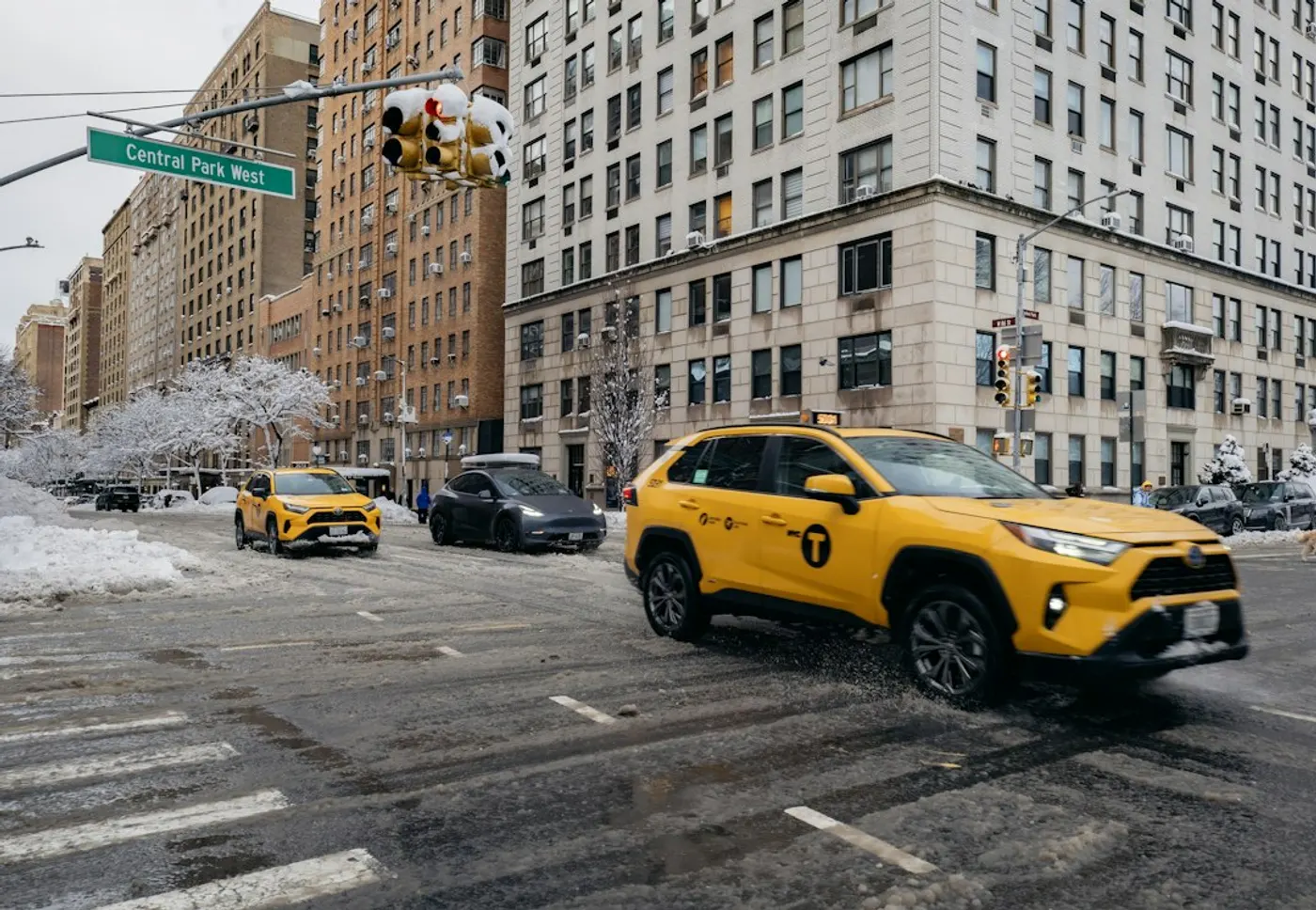
Only during a declared storm emergency. New York City does not have a standing travel ban. On February 22, 2026, Mayor Zohran Mamdani declared a local state of emergency ahead of a major snowstorm.
The citywide travel restriction ran from 9 p.m. Sunday, February 22, to 12 p.m. Monday, February 23, 2026. It covered streets, highways, bridges and tunnels, and it applied to commercial trucks, e-bikes, scooters and mopeds, except for the exempt groups. The order said violations are punishable as a class B misdemeanor and that it lasts five days unless limited, extended or revoked.
New York City rules: The city follows the same state law as the rest of New York, but its mayor issues the order for all five boroughs at once. The February 2026 order also ran alongside state limits, including a ban on empty tractor-trailers and tandem trucks on seven NYC bridges from 7 p.m. Sunday to 10 a.m. Monday.
What about the Hudson Valley, Rochester and the rest of upstate?
Counties in the Hudson Valley, Western New York and the Finger Lakes each decide for themselves. Dutchess County ordered a ban for the February 2026 storm under an emergency declared by County Executive Sue Serino. The State also limited trucks in Orange, Rockland and Westchester counties that night, with empty commercial vehicles and all tandem tractor-trailers banned on I-84 and roads south of it.
Counties such as Orange, Ulster, Columbia, Monroe and Westchester, and cities such as Rochester, have the same power under Executive Law § 24. We could not confirm bans for each, so check your county or city emergency office for current orders.
What did the State do in the 2026 storms?
The State focused on trucks and urged everyone else to stay home. In late January 2026, the Governor said a state of emergency remained in place statewide. Commercial vehicles were limited to the right lane on all state roads from 12 a.m. Sunday, January 25, and long combination tandem vehicles were banned from the full Thruway system from 6 a.m. that day. The Governor told New Yorkers to avoid unnecessary travel, which was advice, not a ban.
On February 22, 2026, the State added the I-84 truck limits and the NYC bridge ban described above, and told motorists to follow local travel bans.
Timeline of recent New York travel bans
- November 2014: Erie County declares an emergency and bans travel in parts of Buffalo and the southtowns.
- January 14, 2024: state and local leaders extend Buffalo-area bans, keeping a full ban in Lackawanna, Cheektowaga and Lancaster.
- December 29, 2025: the Governor expands a state of emergency statewide (Executive Order No. 551) and bans empty tractor-trailers and tandem trucks on Western New York roads.
- January 25, 2026: truck lane limits and a Thruway ban on long combination tandem vehicles take effect.
- February 22 to 23, 2026: New York City and Dutchess County issue overnight travel bans.
Myths and facts
- Myth: The State bans all driving in a storm. Fact: Bans come mostly from counties, cities, towns and villages. The State mostly limits trucks.
- Myth: A travel advisory is the same as a ban. Fact: An advisory is advice. A ban is an order you can be charged for breaking.
- Myth: A ban in one county covers the next county. Fact: Each order covers only its own area.
Can a travel ban limit more than driving?
Yes. The same section lets a local emergency order limit places of amusement and assembly, and restrict alcohol, firearms, explosives and flammable materials, much like the open fire limits in a New York burn ban. Read the order itself. If you carry a firearm, our page on New York gun laws covers the state rules.
What should you do during a travel ban?
- Stay home unless you are exempt, and follow orders from your own county, city, town or village.
- If you must go out as an essential worker, bring proof of your job and your employer’s contact information.
- If you are stopped, stay calm, show your documents and explain why you are out. Write down the time, place and officer details.
- If you get a ticket or are charged, do not ignore it. Contact a New York-licensed criminal defense attorney.
For more storm and emergency topics, see our outdoors, weather and emergencies section. For road rules, see driving and vehicles.
Frequently asked questions
Is there a travel ban in Buffalo, NY today?
We cannot know today’s orders from this page. Buffalo and Erie County issue bans only during severe storms. Check the Erie County Executive, the City of Buffalo and your town for current orders before you drive.
Is there a travel ban in New York City?
Only during a declared emergency. New York City had a citywide travel restriction from 9 p.m. on February 22 to noon on February 23, 2026. Outside a declared storm emergency, no citywide ban applies.
Is there a travel ban in Dutchess County, NY?
Only when the County Executive issues one. Dutchess County had a ban from 9 p.m. February 22 to 9 a.m. February 23, 2026, with exceptions for essential personnel. Check the county website for current orders.
Is there a driving ban in Hamburg, NY today?
Only if the town or village issues one. Hamburg is in Erie County, and either the county or the town can order a driving ban during a storm. Check both before you drive.
Can I be arrested for driving during a travel ban?
Yes. Knowingly violating a local emergency order is a class B misdemeanor under Executive Law § 24. It carries up to 3 months in jail and a fine up to $500.
Does a state of emergency mean a travel ban?
No. A state of emergency lets officials act, but a travel ban is a separate order. In January 2026 the state of emergency covered the whole state, yet the State asked people to avoid travel and limited only certain vehicles.
What changed on this page
- October 26, 2026: first publication, checked against Executive Law §§ 24, 28 and 29-a, Penal Law §§ 70.15 and 80.05, and the Governor’s and NYC Mayor’s 2026 storm releases. Spotted a mistake? See our corrections page and editorial policy.
If this affects you
For current orders, contact your county or city emergency management office. For a ticket or criminal charge, talk to a New York-licensed criminal defense attorney. The New York State Bar Association lawyer referral service can help you find one. For related topics, browse crime and courts.