Car Seat Laws NY: Age, Booster and Rear-Facing Rules in New York (2026)
Short answerYes. Under Vehicle and Traffic Law § 1229-c, every child under 8 must ride in an appropriate child restraint system, and children under 2 must be rear-facing unless they outgrow the seat’s limits. A violation carries a fine of $25 to $100.
Last verified: November 2, 2026 against Vehicle and Traffic Law § 1229-c (revision of August 28, 2026) and the Governor’s Traffic Safety Committee
If you are trying to understand the car seat laws NY parents have to follow, the rules depend on your child’s age, weight and height. The state sets minimum ages, and the seat maker’s limits decide when a child can move to the next stage. This page covers each stage, the fines and the exceptions for taxis and other vehicles. It is general information, not legal advice.
Key facts
- Under 2: rear-facing seat, unless the child exceeds the maker’s weight or height limit for that seat.
- Under 4: a federally approved child seat (49 C.F.R. 571.213).
- Ages 4 to 7: an appropriate child restraint system, such as a booster, used with a lap and shoulder belt.
- Age 8 and older: a seat belt, and every passenger 16 and over must buckle up.
- Fine: $25 to $100 for a child restraint violation.
- Taxis and liveries: exempt from the child seat rules, but belt rules apply to riders 8 and older.
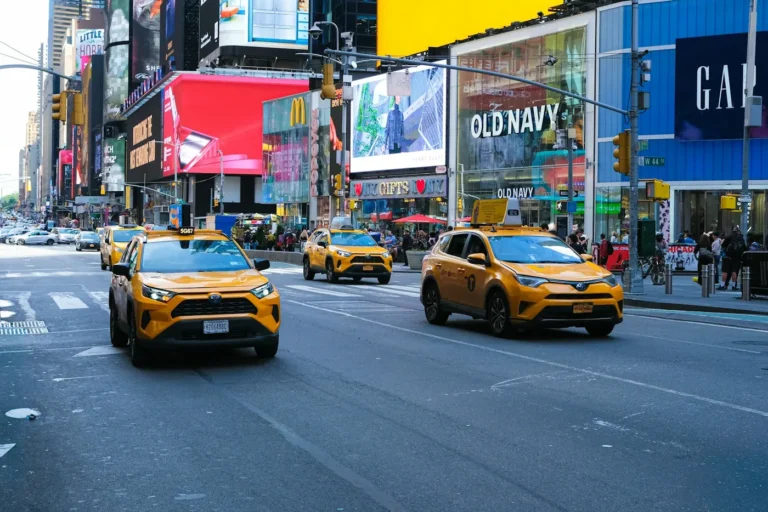
- New York City: the state law applies on every city street.
What are the New York child car seat requirements by age?
New York sets four stages, and each one is written into VTL § 1229-c. The stage your child is in depends on age first, then on the size limits printed on the seat.
| Child’s age | What the law requires |
|---|---|
| Under 2 | A rear-facing seat. A child may face forward only after exceeding the weight or height limit of the rear-facing seat. |
| Under 4 | A specially designed seat that meets federal standard 49 C.F.R. 571.213, attached to the vehicle or secured by a safety belt. |
| 4 to under 8 | An appropriate child restraint system used with a lap and shoulder belt. A lap belt alone is allowed only if the vehicle has no shoulder belts or they are all in use for passengers under 16. |
| 8 and older | A safety belt. Children 8 to 15 must be buckled in. |
An “appropriate” system means the child fits the weight and size recommendations of the seat’s manufacturer. A child under 4 who weighs more than 40 pounds may use a booster-style system with a combination lap and shoulder belt instead of a harness seat.
Is rear-facing required in New York?
Yes, for children under 2. The rear-facing rule took effect on November 1, 2019. The statute now requires it in VTL § 1229-c(1).
The Governor’s Traffic Safety Committee goes further than the statute. It advises keeping infants and toddlers rear-facing for as long as possible and using a harness until at least age 4. Those are safety recommendations, not extra legal duties.
Booster seat and seat belt rules
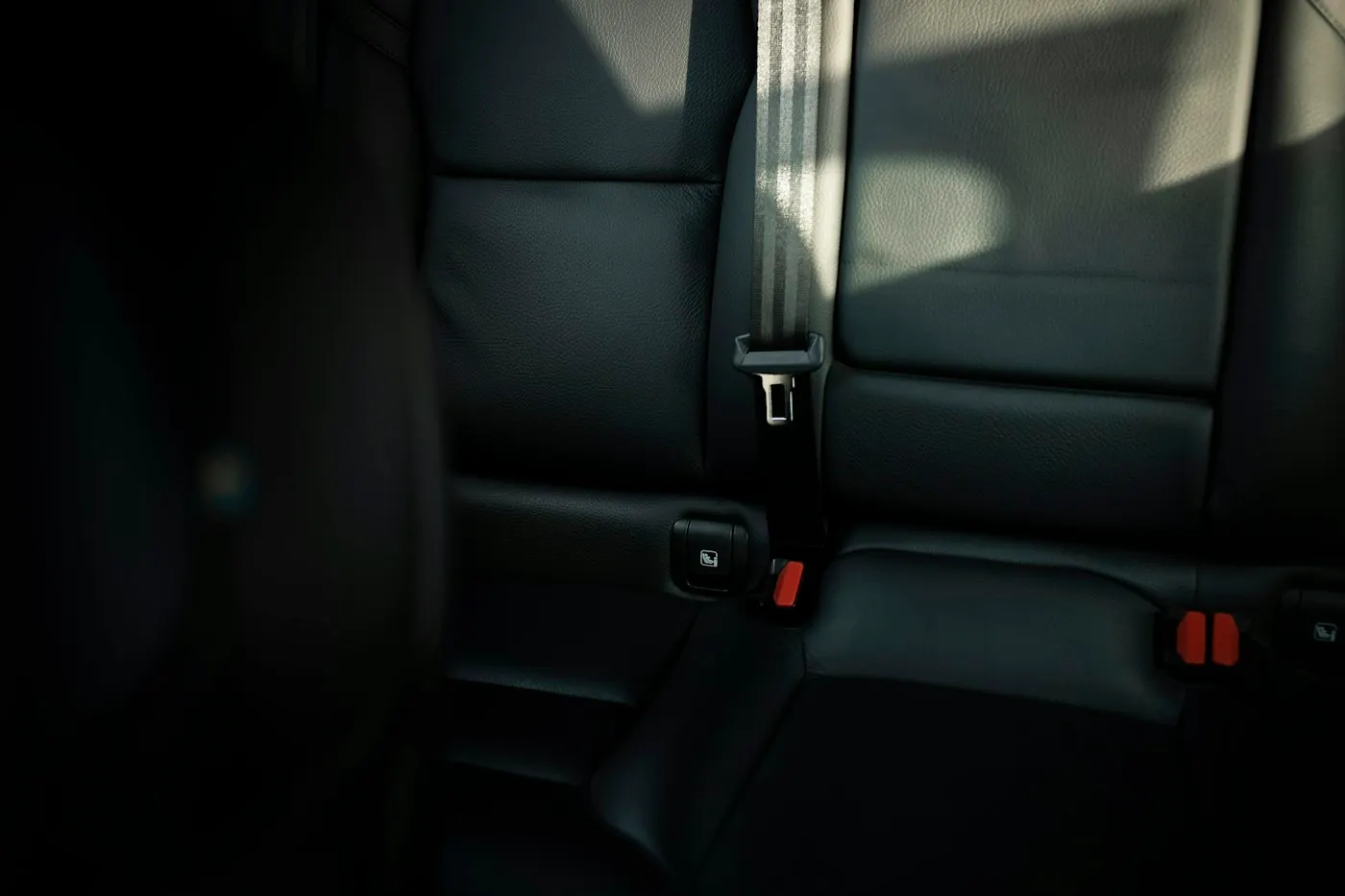
Children from 4 to under 8 must be in an appropriate child restraint system, which for most families means a booster seat. A booster lifts the child so the lap and shoulder belt sit across the hips and chest instead of the stomach and neck.
New York has a size defense for taller kids. A driver cannot be convicted of the booster violation if the child was wearing a safety belt and is more than 4 feet 9 inches tall or weighs more than 100 pounds. That defense must be raised if you are charged.
Where can a child sit in the car?
The statute covers both rows. Front-seat passengers under 4 need the same type of child seat, and ages 4 to 7 need an appropriate child restraint. The Governor’s Traffic Safety Committee recommends that all children under 13 ride in the back seat, but that is advice, not a New York law.
What is the fine for breaking the child seat law?
The fine for a child restraint violation is a civil fine of at least $25 and at most $100 under VTL § 1229-c(5). A separate, lower fine of up to $50 applies to adults who skip their own belt.
| Violation | Civil fine |
|---|---|
| Child under 8 not properly restrained (subdivisions 1 and 2) | $25 to $100 |
| Driver or passenger 16 and older without a seat belt (subdivision 3) | Up to $50 |
Court surcharges and fees are added to the fine. If you are charged, the court must waive the fine for a child under 8 when you show proof that you bought or rented a proper child restraint between the charge date and your court date. That waiver does not apply to a second or later conviction.
Are taxis exempt from the car seat rule?
Taxis and liveries are exempt from the child seat rules in subdivisions 1 and 2 of VTL § 1229-c, and from the general belt rule in subdivision 3. A child under 8 is not required by state law to be in a car seat in a yellow cab or livery.
The exemption has limits. Passengers 16 and older and children from 8 to under 16 must still wear a belt in a taxi or livery, and the fine is up to $50. For a passenger aged 8 to under 16, an officer may issue a summons only to a parent or guardian who is 18 or older and present at the time (VTL § 1229-c(3-c)), never to the child. It is also a defense if the taxi or livery itself violated VTL § 383(4-b).
Whether an app-based ride counts as a taxi or livery depends on how the vehicle is classified, so do not assume. The safest choice is to bring your own seat for any child under 8, since a seat is also the best protection in a crash, whatever the law requires.
Other vehicles and exceptions
- School buses: not covered by the standard rule, but a school bus driver may not carry a passenger under 4 unless the child is in a specially designed seat (
VTL § 1229-c(11)). - Other buses: exempt, except charter buses, where riders 8 and older must wear a belt.
- Medical exemption: a physician or nurse practitioner may certify that a physical disability prevents appropriate restraint.
- Rental cars: rental companies must post a sign stating that children under 8 must be in a federally approved child restraint system, and peer-to-peer car sharing programs must post comparable notice on their websites.
- Civil lawsuits: not using a seat cannot be used to prove who caused a crash, but it can reduce damages if pleaded as a defense (
VTL § 1229-c(8)).
New York City rules
New York City follows the state law. A parent driving a child through Brooklyn or the Bronx has the same duties as one upstate, and the NYPD enforces VTL § 1229-c as written.
New York City note: City families often rely on taxis and for-hire cars, where the state exemption applies to children under 8. If you ride often, a lightweight travel seat that installs with the vehicle’s belt makes it easier to keep a child restrained on short trips.
Real New York scenarios
- A road trip to the Adirondacks with a 3-year-old: the child needs a federally approved seat, and a rear-facing seat only if the child is under 2 and still within the seat’s limits.
- A grandparent picks up a 6-year-old after school: the child needs an appropriate child restraint system even for a short drive, and the driver is the person ticketed.
- A 7-year-old who is 4 feet 10 inches tall: if the child is belted, the size defense under
VTL § 1229-c(5)applies when the height is above 4 feet 9 inches.
Myths and facts
- Myth: A child can use a seat belt at age 5. Fact: Children under 8 need an appropriate child restraint system, unless the size defense applies.
- Myth: Taxis must carry child seats. Fact: The state law does not require taxis or liveries to provide them.
- Myth: Children under 13 must ride in the back. Fact: That is a safety recommendation, not a statute.
Is New York changing its child seat law?
Not yet. Bills S9800, A1540 and S2265 would add child restraint rules for passengers under 8 in taxis and liveries, with a fine of up to $50. All three remain in committee in the 2025-2026 session. A separate bill, S6993, would exempt infant car seats from state sales tax, and it is also in committee. None of them changes the current age rules.
Where can you get your seat checked?
The Governor’s Traffic Safety Committee lists free child safety seat inspection stations and check events by county, and you can call its child passenger safety line at 518-474-2279. A trained technician can show you how to install the seat and fit the harness.
Frequently asked questions
What age can a child stop using a car seat in New York?
A child must use an appropriate child restraint system until age 8. After that, a seat belt is required. A belted child taller than 4 feet 9 inches or heavier than 100 pounds has a defense to the booster charge.
How long must a child be rear-facing in New York?
Until age 2, unless the child exceeds the weight or height limit of the rear-facing seat. Experts advise keeping children rear-facing longer if the seat allows.
Do kids need a booster seat in New York?
Children aged 4 to under 8 need an appropriate child restraint system, which is usually a booster for children who have outgrown a harness seat. The size defense can apply to a taller, belted child.
Do you need a car seat in a taxi in New York?
No. Taxis and liveries are exempt from the child seat requirement, though riders 8 and older must still wear a belt. Bringing your own seat is still the safest choice for a young child.
Who gets the ticket if a child is not buckled?
The driver is responsible for a child under 8. In a taxi or livery, where a child aged 8 to under 16 is not belted, an officer may summon only a parent or guardian aged 18 or older who is present, and never the child.
Can I avoid the fine if I buy a car seat after a ticket?
Yes, for a first offense involving a child under 8. The court must waive the fine if you show proof that you bought or rented a proper child restraint between the charge and your court date.
What changed on this page
- November 2, 2026: first publication, checked against VTL § 1229-c and the status of bills S9800, A1540, S2265 and S6993. Spotted a mistake? See our corrections page and editorial policy.
If this affects you
For a car seat ticket, contact the court named on the summons or a New York-licensed traffic attorney. For installation help, use a free inspection station through the Governor’s Traffic Safety Committee. If a child was hurt in a crash, read our New York personal injury laws guide and browse the driving and vehicles section. The New York State Bar Association lawyer referral service can help you find an attorney.